The Hidden American Roots of the Philippines’ Most Beloved Food Brands
Walk through any supermarket in Manila and you will find shelves stocked with products that feel as Filipino as jeepneys and jollibee. Magnolia ice cream in ube and cheese flavors. Cheez Whiz spread thick on warm pandesal. Round butter crackers that look like they have been there forever. Yet the history of these brands is not as straightforwardly Philippine as their labels might suggest. Instead, it is tangled up in the aftermath of the Philippine-American War, the migration of Filipino families to California, and some of the most unusual trademark battles in modern food industry history.

The Soldier Who Stayed
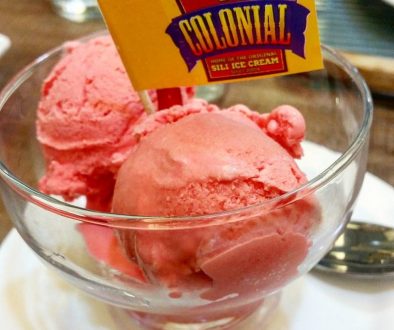
The story begins with an American soldier who decided to remain in the islands. William J. Schober arrived in the Philippines as a cook with the United States Army during the Philippine-American War. When the conflict ended, he did not board a ship home. He settled in Manila and began selling desserts that would eventually become part of the nation’s culinary DNA. Around 1899, Schober began offering what he called “magnolia pie,” “magnolia ice cream,” and “magnolia ice-drop.” The brand name stuck, and the business grew. In 1925, Schober sold his interests to San Miguel Brewery, the emerging Philippine conglomerate that would nurture the Magnolia brand for the next century. It was a conventional commercial transfer, the kind of deal that happens when a founder retires and a larger company sees potential in a local favorite. San Miguel did not seize the brand; it bought it, then spent generations turning Magnolia into a household name recognized in nearly every Philippine province.
The Ignominious Trademark Reversal
For decades, the story was simple enough. Magnolia was a Philippine brand with American origins, much like many other products in a nation that spent half a century under the American flag. But the narrative took a strange turn in the late twentieth century, and it did not turn in the direction most people would expect. In the 1970s, a company called Ramar Foods began operating in California, founded by Filipino immigrants who understood that homesick expatriates craved the flavors of their youth. Ramar started selling ice cream under the Magnolia name, tapping into the powerful nostalgia that Filipino-Americans felt for the brand they had grown up with in Manila. Then, in the 1990s, Ramar secured the Magnolia trademark in the United States. This legal maneuver effectively blocked San Miguel from entering the American market with its own Magnolia-branded ice cream. The Philippine owner of the brand, the company that had actually bought it from Schober in 1925, could not sell Magnolia ice cream to Filipino immigrants in Los Angeles or San Francisco because a Filipino-American company in California had claimed the name.
The irony was not lost on the courts. Ramar’s own president later admitted in legal proceedings that the company had deliberately adopted the Magnolia name to leverage the existing reputation and goodwill that San Miguel had built over decades. It was not a case of a powerful Philippine corporation stealing from a small American inventor. It was the opposite: a diaspora business using United States trademark law to claim a brand that had been legitimately developed and owned in the Philippines for nearly a century. San Miguel fought back through the American legal system, and in 2015, the U.S. Court of Appeals handed down a partial victory. The ruling allowed San Miguel to use the Magnolia name in the United States for butter, margarine, and cheese products, and it lifted an injunction that had prevented the Philippine company from launching new product lines in America. The case remains a fascinating example of how immigration, nostalgia, and intellectual property law can collide in unexpected ways.
When Cheez Whiz Became Filipino
Then there is Cheez Whiz, the bright orange spread that has become so deeply embedded in Filipino food culture that many assume it must have been invented in Quezon City. It was not. Kraft Foods developed Cheez Whiz in the United States and launched it there in 1952. The product came to the Philippine market in 1967 through legitimate corporate distribution channels, not as a bootleg copy of military surplus or a stolen formula. Over the decades, Filipinos embraced it with a fervor that sometimes surprises Americans, using it as a topping for instant noodles, a filling for bread, and a dip for crackers. But its presence in the Philippines has always been authorized. Kraft, now part of a larger multinational portfolio, has maintained official operations and licensing in the country for generations. The brand’s cultural naturalization is real, but its legal status has never been in question.
The Cracker Misunderstanding
The same cannot be said for the confusion surrounding Ritz Crackers and the Philippine biscuit landscape. Some observers have looked at the round, salted crackers produced by local manufacturers and assumed they must be unauthorized copies of the famous Nabisco brand. In reality, Ritz Crackers are sold in the Philippines by Nabisco’s legitimate distribution networks, just as they are in the United States. Meanwhile, Republic Biscuit Corporation, known as Rebisco, has manufactured its own lines of crackers and biscuits since 1963 as a wholly legitimate Filipino enterprise. The existence of multiple cracker brands in a tropical archipelago is not evidence of intellectual property theft. It is simply evidence that people everywhere like crackers.
Real Cream vs. Tropical Formula
Perhaps the most persistent point of contention involves the quality and composition of the products themselves. Consumers who have tasted Magnolia ice cream in both Manila and California often note a stark difference. The American-market version, particularly during the years when Ramar Foods controlled the Magnolia name in the United States, was often made with milk cream and tailored to the expectations of immigrant communities who remembered a certain richness. The Philippine-market version, produced by San Miguel for a domestic audience of over one hundred million people, sometimes relies on different formulations involving vegetable fats and stabilizers that hold up better in a tropical climate and come in at a lower price point. Whether one formulation is superior to the other depends on the palate of the eater, but the difference is a matter of market segmentation and supply chain logistics, not fraud. San Miguel is not selling fake ice cream. It is selling ice cream optimized for the market it has served since the Jazz Age.
Who Owns a Palate?
The history of these brands reveals something larger about the Philippines itself. It is a nation where the culinary line between foreign and local has always been blurry, where American military presence and corporate expansion introduced products that were then adopted, adapted, and ultimately claimed as part of the national identity. Schober’s ice cream, Kraft’s cheese spread, and Nabisco’s crackers all arrived on Philippine shores through the channels of empire and commerce. They stayed because Filipinos made them their own. The legal battles, trademark disputes, and formulation differences that followed are not symptoms of corruption or theft. They are the natural consequences of a postcolonial economy trying to sort out who owns what, and who gets to decide what counts as truly Philippine.
In the end, the story of these foods is not a simple morality play about stolen inventions or corrupt patent laws. It is a complicated, century-long negotiation between history and commerce, between the memory of an American cook who stayed behind after the war and the modern conglomerate that bought his recipes, between immigrants in California who missed the taste of home and the courts that had to decide who had the right to sell it to them. The products on those Manila supermarket shelves may have foreign roots, but their branches have grown deep into Philippine soil. That is not theft. That is just how food history works.